


Find the cause.Choose right.Follow through. — Dr. Seyed Mehdi Haghdoust
Infectious and Tropical Diseases Specialist Tabriz
For a fever that will not settle or an infection that keeps coming back. Cause first, then the medicine.
Find the cause first, then choose the medicine.
Dr. Seyed Mehdi Haghdoust is an infectious and tropical diseases specialist in Tabriz. The specialty deals with infections caused by bacteria, viruses, fungi or parasites: from a fever that will not go away and infections that have not cleared after several antibiotic courses, to endemic diseases and fever after travel. Not every fever needs an antibiotic, and an antibiotic taken without need can delay finding the real cause. This site helps you know when to see an infectious diseases specialist, what a culture result and an antibiogram say, and what to bring to the first visit.
More about the doctorFrom fever and resistant infections to endemic diseases, in plain language.
Every infection has its own cause and course. These pages explain what the problem is, how it is investigated and how treatment generally works. Your diagnosis and treatment plan are decided by the doctor after an examination.
Resistant and recurring infections
When several courses of antibiotics have not worked, or an infection comes back after treatment, the cause needs to be found: which germ it is, where in the body it sits, and whether it resists the drug. This page explains, in plain words, how the work-up goes and the basics of treatment.
Read moreProlonged fever and fever after travel
A fever that lasts for weeks, or that starts after a trip, needs to be traced to its cause with questions and tests, and it is not treated with guesswork antibiotics. This page explains what the doctor asks, why malaria must be ruled out the same day after travel, and when not to wait.
Read moreDiabetic foot wounds, bone infection and infection after surgery
A wound that will not heal, a red and hot foot in diabetes, or a deep pain in a bone can be a sign of infection. This page explains what to show a doctor early, how infection is investigated, and why bone infection is treated for a long time.
Read moreLocal infections: brucellosis, tuberculosis and leishmaniasis
Brucellosis comes from infected animals and dairy, tuberculosis spreads through the air, and leishmaniasis comes from the bite of a sandfly. All three can be treated, but incomplete or late treatment has a cost for each. This page explains how each is caught, the signs, how it is investigated, and the basics of treatment.
Read moreHepatitis and HIV
HIV and hepatitis B can be kept under control with treatment and regular follow-up, and hepatitis C can be cured in most patients. None of them spreads through shaking hands or sharing a meal. This page explains in plain, non-judgmental terms how they spread, how they are tested for, and the basics of treatment.
Read more
From your story to follow-up after treatment
Not every fever needs an antibiotic. The cause comes first, and a medicine is chosen afterwards only if it is needed. At each step you know what comes next.
- Step 1 of 5.
Listening to your story
You are asked about travel, contact with animals and the medicines you have taken. Bring earlier test results.
- Step 2 of 5.
Examination and symptoms
The examination is read together with your story, and it shows which tests are actually needed.
- Step 3 of 5.
Sampling and culture
In some infections a sample is taken to find out which germ is involved. A culture result takes time.
- Step 4 of 5.
Choosing a medicine from the results
Not every fever or infection needs an antibiotic. If one is needed, it is chosen from your results and your condition.
- Step 5 of 5.
Finishing, follow-up and prevention
Finish the course as the doctor advised. At the next visit you review follow-up and ways to prevent it from coming back.
You are not alone on this path.
Treating an infection is more than visits. Tests, imaging, specialty medicines and follow-up are all part of it. The support team coordinates these so that you and your family spend less time chasing them.
Lab tests and blood sampling at home
The support team arranges the appointment, the sampling and the follow-up of test results.
Imaging and ultrasound
Quick appointments and results, second reads of images, and reports sent directly to the treating doctor.
Pharmacy and specialty medicines
Help getting specialty medicines, with quick delivery for Tabriz residents.
Fast referral to specialists and sub-specialists
If you need another doctor, the support team books the appointment and refers you.
Rehabilitation and wellbeing
The support team books appointments and refers you to rehabilitation and health specialists.
Treatment and rehabilitation at home
When getting out is hard, part of treatment and rehabilitation comes to you.
Services marked "Free" on the support form are provided at no cost.
What is worrying you?
Tap what you are facing to reach the matching page. This list is not a diagnosis; it only points you to the right page.
- A fever that will not go away
- Fever after travel
- An antibiotic that did not work
- A urinary infection that keeps returning
- A foot wound that will not heal
- A culture or antibiogram result
- Contact with livestock or unpasteurized dairy
- A positive hepatitis or HIV result
- Vaccines before travel
Fever with a stiff neck, confusion, shortness of breath or a rash that does not fade when pressed, or a foot wound whose redness is spreading fast, cannot wait for an appointment. In an emergency, call 115 (Iran's emergency number). When should I call urgently?
Simple answers to the first questions.
Why did the antibiotic not work?
There are several possible reasons. The cause may have been a virus, which antibiotics do not treat. The germ may be resistant to that drug, the drug may not suit the site of infection, or the course may not have been finished. Several courses in a row without finding the cause usually do not help. Only a doctor can tell you the reason in your case, after assessing you.
Does every fever need an antibiotic?
No. Most short fevers are caused by viruses, and antibiotics do not help against them. A fever lasting more than a few days, or one with warning signs, should be assessed so the cause can be found.
Should I take the antibiotic left over from my last course?
No. A medicine is prescribed for one infection and one defined course. Taking leftovers, or someone else's medicine, can mask the cause and make germs more resistant. Talk to your doctor or pharmacist about what is left.
What does an antibiogram result mean?
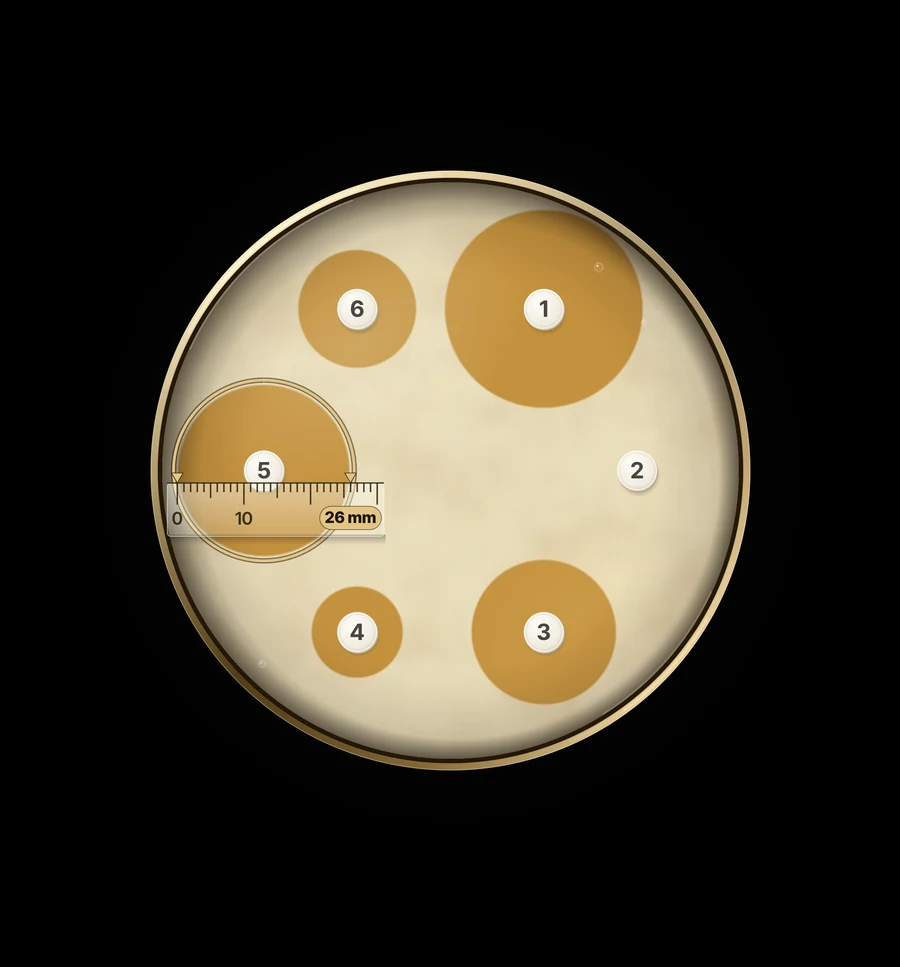
An antibiogram shows which antibiotics stop that germ from growing in the laboratory. A larger zone does not automatically mean a better drug, because each drug has its own interpretation limit and the site of infection and your condition matter too. The doctor chooses the drug; it is not chosen by reading the result.
What should I bring to the first visit?
Test and culture results, a list of the medicines you have taken (name and approximate dates), your fever notes if you kept any, dates and destinations of recent travel, any contact with livestock or unpasteurized dairy, and imaging or hospital discharge reports. If something is missing, come anyway.
Is my illness contagious? Is my family at risk?
It depends on the infection. Some do not pass from person to person and some do. Until the cause is clear, washing hands, keeping personal items separate and staying home while feverish are sensible. The doctor can advise about you and those around you once there is a diagnosis.
Which vaccines should I have before travel?
It depends on the destination, season, length of trip, your age and your vaccine history, and some vaccines must be given weeks before you leave. Ask as soon as your plans are set.
When should I go to the emergency room?
Fever with a stiff neck, confusion or marked drowsiness, shortness of breath, a rash that does not fade when pressed, a seizure or severe dehydration cannot wait for an appointment. The same goes for fever after travel to a malaria area, and for fever in someone with weak defenses. Call 115. The full list is in the patient guide.
Will my hepatitis or HIV result stay confidential?
This website makes no promise about how patient information is handled, because the doctor must confirm the practical arrangements. At the visit, or before the test, ask who the result will be given to.
Do you work with insurance?
The list of insurers will be announced soon.
Do you offer online follow-up?
Details will be announced once the doctor confirms them.
These answers are general and do not replace your doctor's advice for your situation.
The first step, a calm conversation.
Go to the booking page or talk to support. Either way, we are with you.
Support number